Compound Microscopes
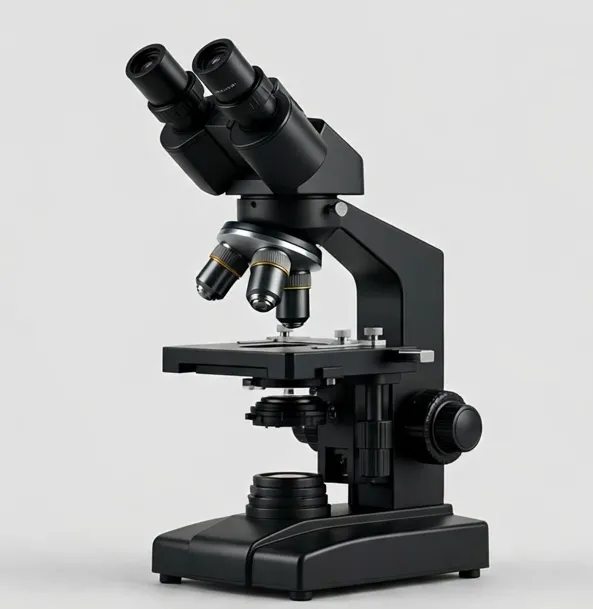
The compound microscope is the classic laboratory instrument: light passes through a thin, prepared specimen on a slide, and a system of objective lenses and eyepieces magnifies it — honestly, optically, from 40x to about 2000x. This is the microscope of biology classes, pond-water investigations, cell observation and routine laboratory work.
Head style is the first choice. A monocular head is the economical student standard. A binocular head costs more and repays it in comfort during long sessions — both eyes open, less strain, better fine focus. A trinocular head adds a camera port so the view can be shown on a screen or recorded while someone works at the eyepieces; it is the teaching and documentation configuration.
Objectives decide image quality. Achromatic objectives are the honest workhorse standard; plan achromatic objectives keep the field flatter toward the edges, which matters for photography. The 100x objective is an oil-immersion lens, used with a drop of immersion oil, and is where bacteria-sized detail lives. Below that, 40x–400x covers most school and hobby observation.
The supporting parts matter more than brochures suggest. An Abbe condenser with an iris diaphragm controls contrast — the difference between a transparent specimen you can barely see and one with visible structure. A mechanical stage moves the slide in small, repeatable steps instead of fingertip nudges. Coarse and fine focus on the same axis (coaxial) keeps one hand on focus while the other moves the slide.
One boundary deserves plain words: these are education, hobby and routine-lab instruments. They are not clinical diagnostic devices, and no listing here claims they replace certified medical laboratory equipment.
Buying for a school or a department adds fleet logic: matched models simplify teaching and spare parts; prepared slide libraries matter as much as the instruments; and a cleaning routine with kits on hand keeps a set working for years. Our business and education page covers how institutional orders are structured here.
For the individual buyer, the most common mistake is spending the whole budget on magnification and none on the support system — slides, a mechanical stage worth using, and light control. The second most common is skipping the prepared slides and then having nothing good to look at on day one. Avoid both and a modest compound microscope will teach for a decade.
Prepared slides deserve their own sentence in any compound decision, because they are the content library of the instrument. A microscope with a shelf of good slides — botany, zoology, textiles, histology teaching sets — gets used weekly; one waiting for its owner to master slide preparation gets used monthly. Our 100-piece set exists precisely to stock that shelf on day one, and blank slides plus simple stains extend it as skills grow.
The used-market question arises often enough to answer here: compound microscopes hold up well second-hand, but objectives and focus mechanisms are the wear points, and a cheap used instrument with a slipping focus or a hazed objective is no bargain. New instruments at the prices in this category — warranted, complete, with slides in some boxes — have narrowed the used advantage to the point where most buyers are better served here.
Compound Microscopes — models
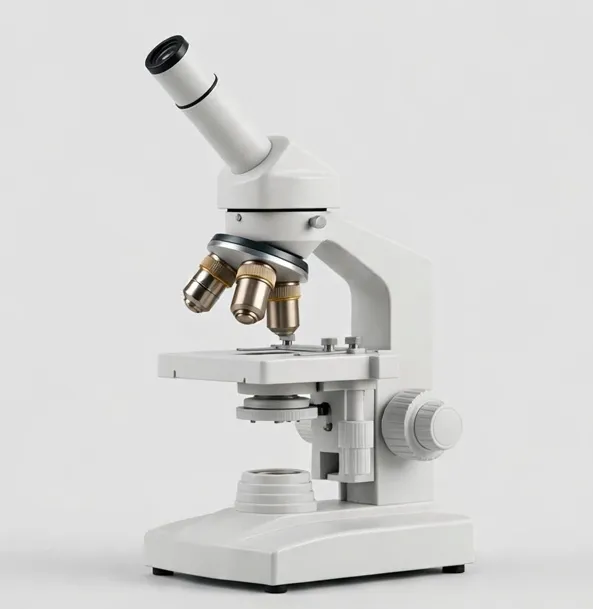
Honest student compound microscope: glass optics, LED illumination, metal frame
A monocular compound microscope with 40x–1000x optical magnification,achromatic objectives and LED light — the straightforward choice for school and home labs.
None — optical eyepiece viewing40x–1000x optical
$159.99
Sample catalog — order confirmed by email
Binocular comfort for longer lab sessions, with a double-layer mechanical stage
A binocular compound microscope with two eyepiece sets (40x–2000x optical), Abbe condenser and a smooth double-layer mechanical stage for serious coursework and lab routines.
40x–2000x optical
$339.99
Sample catalog — order confirmed by email
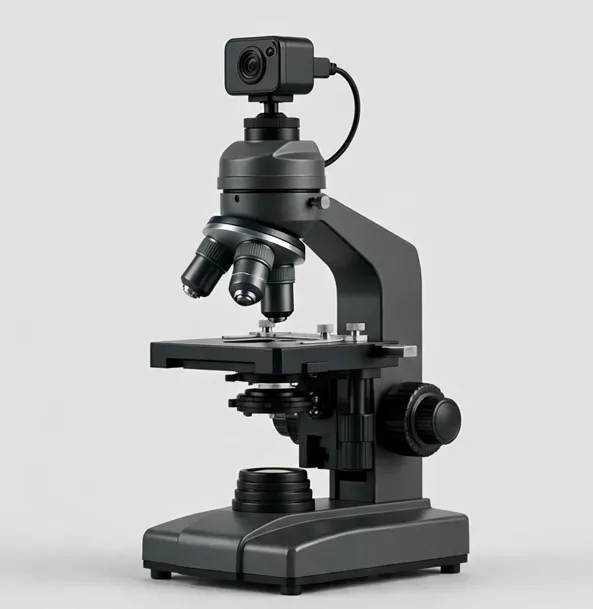
Teach and record at once: trinocular head with a 5MP USB camera included
A trinocular compound microscope (40x–1000x optical) with a 5MP USB camera in the box — demonstrate through the eyepieces while the class watches the screen.
40x–1000x optical
$399.99
Sample catalog — order confirmed by email
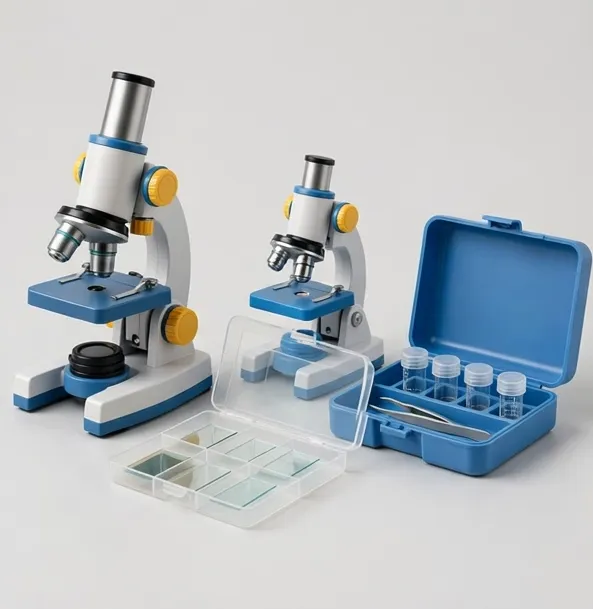
A real first microscope kit — glass optics, dual light, slides and case included
A complete starter kit: metal-frame kids microscope (100x–1200x optical), 12 prepared slides, blank-slide supplies and a case. Batteries included in the workflow, not the app store.
100x–1200x optical
$39.99
Sample catalog — order confirmed by email
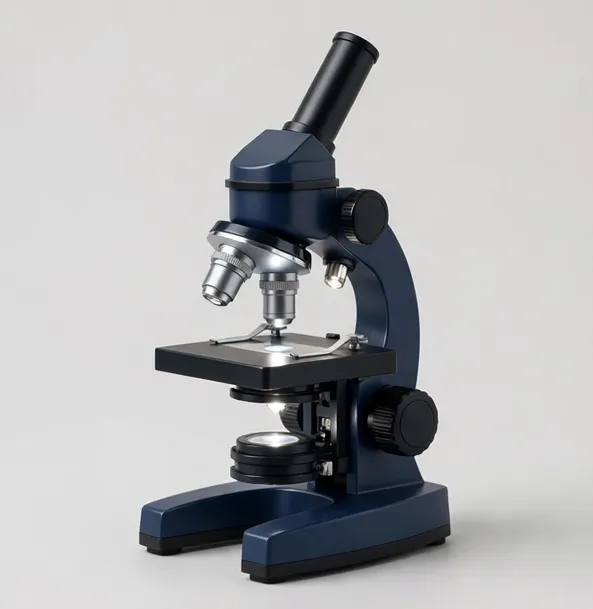
Slides and solid specimens in one student microscope, with dual lighting
One microscope for both worlds: compound viewing for slides and a low-power view for rocks, bugs and leaves, with dual LED light and a phone adapter for photos.
20x–2000x optical
$79.99
Sample catalog — order confirmed by email
Buying guidance: compound microscopes
Head: mono, bino or trino
Mono for budget and school sets; bino for sessions over ~30 minutes; trino when a camera must share the view for teaching or records.
Objectives
Achromatic 4x/10x/40x/100x is the standard set. Plan objectives flatten the field for photography. The 100x needs immersion oil.
Condenser and stage
An Abbe condenser with iris diaphragm controls contrast; a mechanical XY stage makes high-power work practical instead of frustrating.
Magnification honesty
Optical only: eyepiece × objective. 40x–2000x covers everything from plant cells to bacteria with oil immersion.
Illumination
LED transmitted light with brightness control is the modern standard — cool, even and battery-friendly on student models.
Frequently asked questions
What can I see with a compound microscope?
Prepared slides and thin specimens: plant and animal cells, pond microorganisms, fibers, crystals, blood cells (as an educational observation), and bacteria at 1000x with oil immersion. Solid objects like coins belong under a stereo or digital microscope instead.
What is the difference between monocular, binocular and trinocular?
One eyepiece, two eyepieces, or two eyepieces plus a camera port. Binocular is more comfortable for long sessions; trinocular adds screen sharing and photography without removing an eyepiece.
Do I need the 100x oil-immersion objective?
Only for the smallest subjects, such as bacteria, and it requires immersion oil and care. Most school and hobby work happens at 40x–400x.
Can a compound microscope view coins or insects whole?
Not well. Compound microscopes are designed for thin specimens on slides with light passing through. Whole solid objects are the job of stereo and digital microscopes.
Is a compound microscope suitable for medical diagnosis?
The models listed here are education, hobby and routine laboratory instruments. They are not sold or certified as clinical diagnostic devices.
Still deciding? Try the Microscope Finder or compare models side by side.