The boom stand exists because workpieces refuse to fit under fixed microscopes. A motherboard, an engine part, a framed artwork, an assembly jig — the specimen is large, and the microscope must come to it, hover, and then get out of the way. Boom and flex-arm stands answer with reach: the head swings in an arc over the bench, holds its position, and parks completely clear when the job changes.
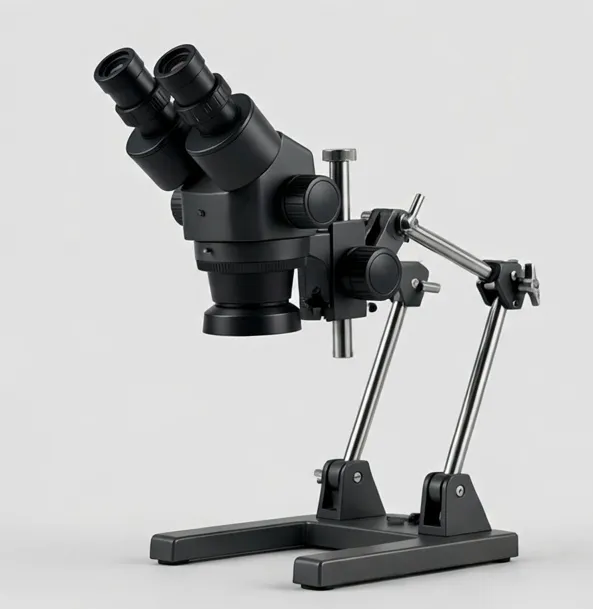
Three arm styles cover the benches. Double-arm boom stands are the workshop standard: a vertical post, a horizontal arm sliding through a bearing block, and a heavy base — smooth, strong, and repairable for decades. Single-arm booms are lighter and cheaper for smaller heads. Flexible gooseneck arms suit camera heads and quick repositioning at inspection points.
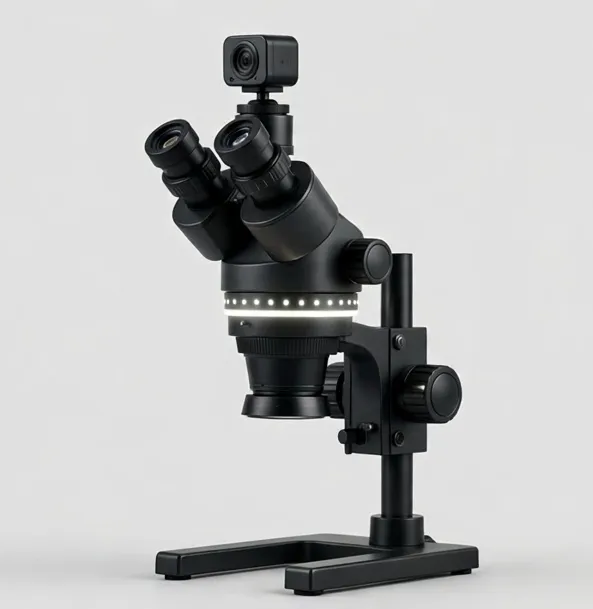
The head pairing decides the work. Stereo heads on booms are the electronics and jewelry standard — depth perception over big boards. Camera heads on arms turn the bench into a documentation station, feeding a monitor while the arm floats the lens over the part. A stand alone, bought for a head you already own, is often the smartest upgrade in this whole category: it converts a cramped instrument into a workstation.
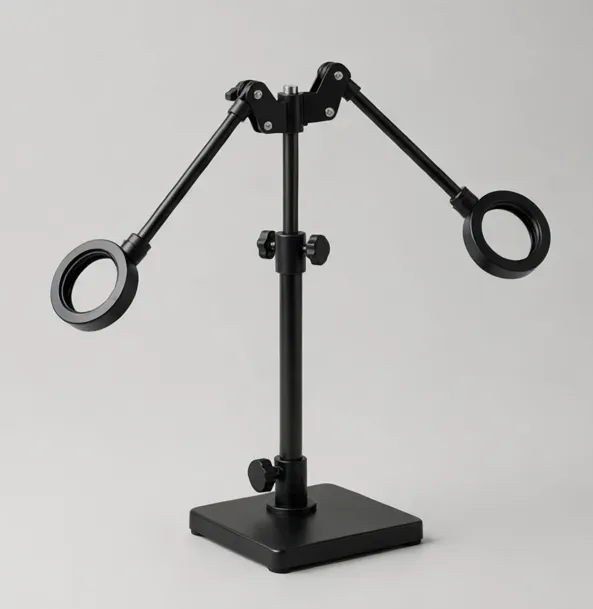
Specifications to compare are reach (how far from the post the head can work), vertical range, base weight, and the focus-mount size your head needs — 76 mm is the common stereo standard and the mount our stand includes.
Stability is the honest trade: longer reach means more leverage, so heavy bases and smooth bearings matter. A boom that drifts or sags mid-task is worse than a post; everything listed here is specified for the head weights it carries, and the product pages state them.
Boom setups reveal their value in week two, when the novelty fades and the workflow remains: swing in, work, swing out, bench clear. Technicians consistently rank the stand alongside the head in importance — and a mediocre head on a great boom usually outworks a great head on a cramped post.
If you are furnishing a full station, budget the trio together: head, boom stand, ring light. Bought as a system with verified mount compatibility, they arrive as a workstation rather than a pile of parts — and every product page here states the mount sizes so the system you assemble is the system that fits.
Safety and tidiness scale with reach: a long boom over a busy bench should park against a wall side, cables should route along the arm rather than dangle into the swing, and heavy heads deserve a countercheck of the base weight rating before the first swing. Ten minutes of setup discipline makes the boom invisible in daily work — which is the entire point of owning one.
A boom stand also future-proofs the bench: heads change as work changes — a camera this year, a trinocular stereo next — while the stand, the arm and the base persist through all of it. Buy the stand as infrastructure, rated generously for weight and reach, and it will carry instruments you have not bought yet. That is the economics behind this category's existence as a separate destination rather than a footnote on head pages.
Boom Stand Microscopes — models
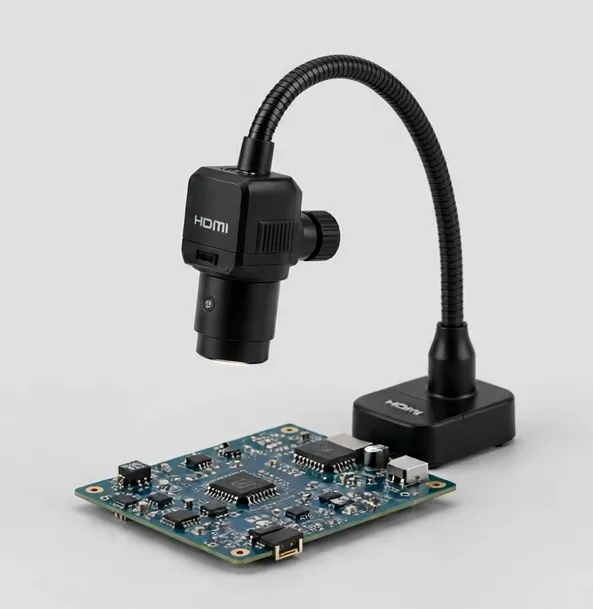
4K HDMI camera microscope on a flex arm — autofocus keeps joints sharp while you work
Measure from the post position to your furthest working point; choose arm reach with margin. Base weight should grow with reach.
Double-arm for daily work
The bearing-block double arm is the smooth, durable standard for stereo heads and daily repositioning.
Flex arm for cameras
Gooseneck/flex arms suit light camera heads and fast angle changes at inspection points.
Mount size
Stereo focus mounts are commonly 76 mm. Our BoomArm Pro includes that ring; check your head before ordering any stand.
Upgrade path
Already own a good head? A stand alone converts it into a workstation for less than a new microscope.
Frequently asked questions
Why choose a boom stand over a pillar stand?
Reach and clearance. The head swings over large workpieces and parks off the bench entirely. Pillar stands are steadier for small, fixed inspection points; booms win on everything large or varied.
Will a boom stand hold position without drifting?
A quality double-arm boom with a heavy base and smooth bearings holds position under the head weights it is rated for. Check the rated pairing on the product page; undersized stands for heavy heads are the usual cause of drift.
Can I mount my existing stereo head on a boom stand?
Usually yes, if the focus mount matches — 76 mm is the common standard and is included with our BoomArm Pro. Verify your head’s mount size before ordering.
Boom arm or flex arm for a camera microscope?
Flex arms reposition fastest and suit light camera heads. Boom arms carry heavier heads (stereo) and hold long reaches steadier.
How much bench space does a boom setup need?
The base footprint is modest (about 10 × 8 in on our stand), but plan the swing arc: the head parks to one side, so leave that arc clear of tall obstacles.