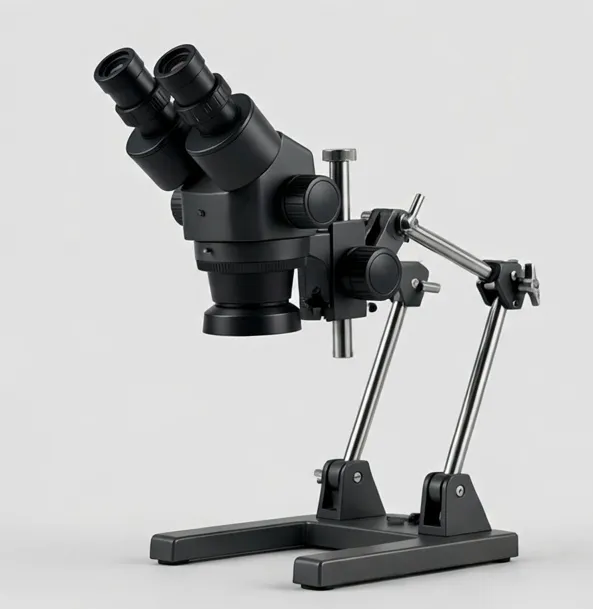
True stereo depth for inspection and repair — continuous 7x–45x zoom on a boom arm
MicroHub ZoomStereo 7x–45x Stereo Microscope on Boom Stand
7x–45x continuous optical zoomWorking distance to 4 in
$649.99
Sample catalog — order confirmed by email
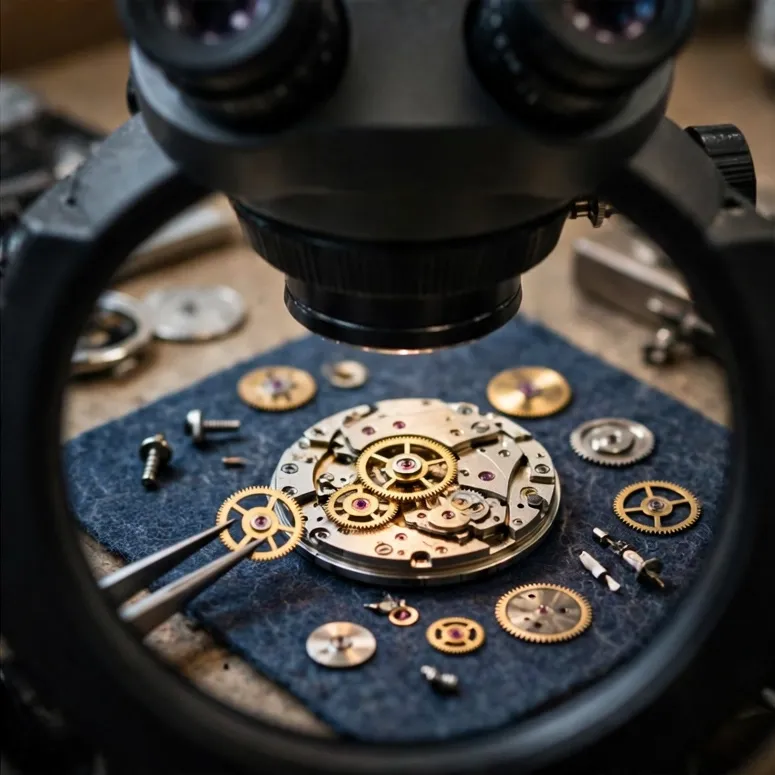
Jewelers and watchmakers work in a world measured in tenths of millimeters, where the questions are physical: Is the prong fully seated? Is the jewel cracked? Is that gear tooth worn or broken? Stereo microscopes answer them because they preserve depth — you see the setting, not a picture of it — while leaving both hands free for tweezers, gravers and screwdrivers.
The standard station is a continuous-zoom stereo head (7x–45x) on a boom arm, so the microscope floats over the bench block and swings away between jobs. Working distance around four inches fits tools and hands. A 0.5x Barlow lens doubles that distance for tall pieces at lower magnification — a common watchmaker configuration.
Light does double duty in this trade. A dimmable ring light gives the even, shadow-free view for inspection and photography; lowering the brightness and angling a side light reveals inclusions, scratches and surface-reaching features in stones. Photographing through a trinocular head or camera documents intake condition — the photograph that protects you when a customer returns.
A professional boundary belongs here: microscope inspection informs your assessment of a stone or a movement. It does not by itself certify a gemstone's identity or grade — formal gem identification and grading use additional instruments and, for reports, accredited gemological laboratories. Reputable benches are clear about that distinction with customers.
True stereo depth for inspection and repair — continuous 7x–45x zoom on a boom arm
$649.99
Sample catalog — order confirmed by email
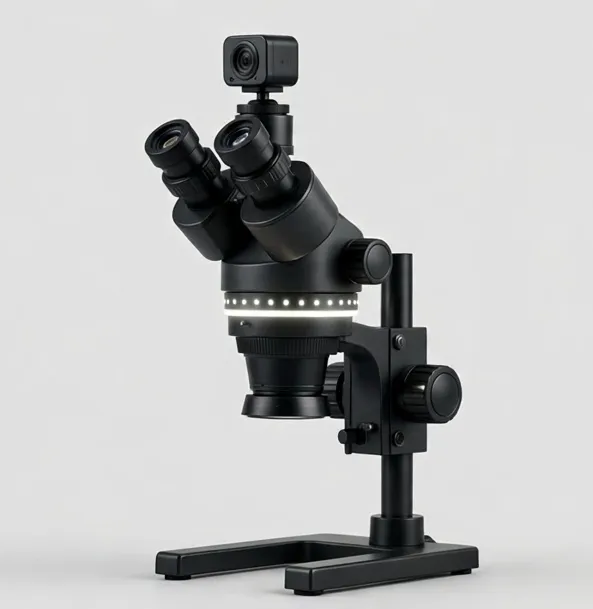
Stereo viewing plus a camera port and ring light — train others while you work
$949.99
Sample catalog — order confirmed by email
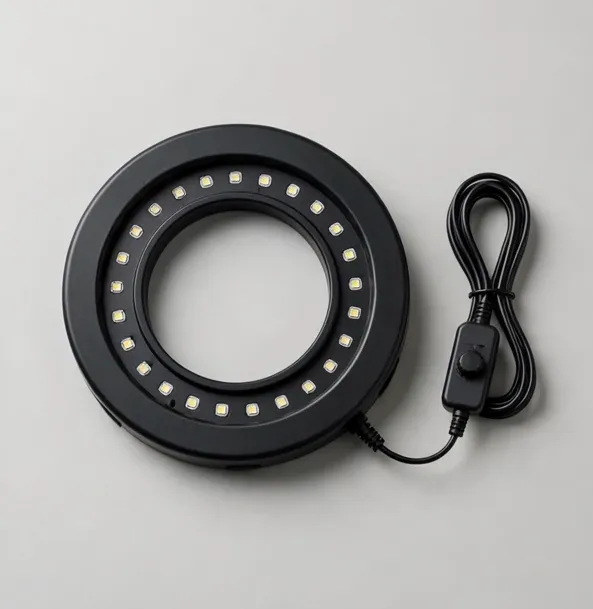
Shadow-free illumination for any microscope — 144 LEDs with a dimmer
$59.99
Sample catalog — order confirmed by email
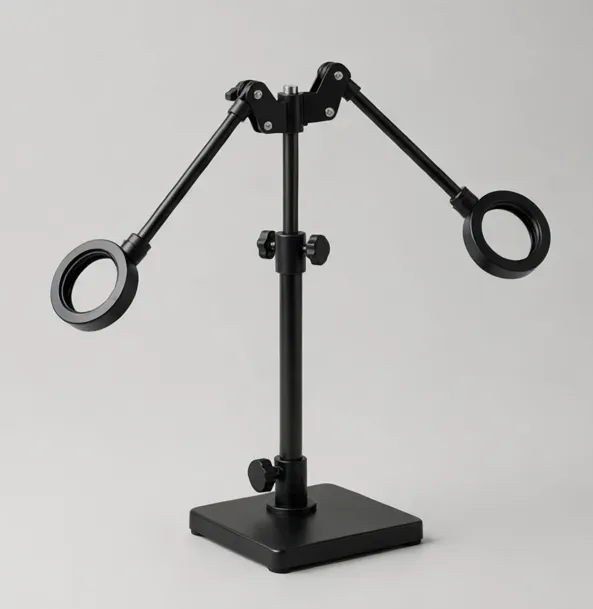
Give your stereo head room to work: double-arm boom stand, heavy base
$349.99
Sample catalog — order confirmed by email
Browse the full ranges: Stereo Microscopes · Boom Stand Microscopes
True depth perception. Judging prong seating, stone position and gear engagement is three-dimensional work, and stereo viewing keeps both hands free under a long working distance.
Mostly 10x–30x of the 7x–45x zoom range for movement work, pushing higher for pivot and jewel inspection. A 0.5x Barlow trades magnification for working distance on tall pieces.
A microscope is the primary observation tool, but formal grading and identification involve additional instruments and standards; certified reports come from gemological laboratories. Inspection informs; it does not certify.
Use a trinocular head with a camera, or a camera on an eyepiece adapter. Dimmable ring light controls reflections on polished metal, which is the usual photography problem in this trade.