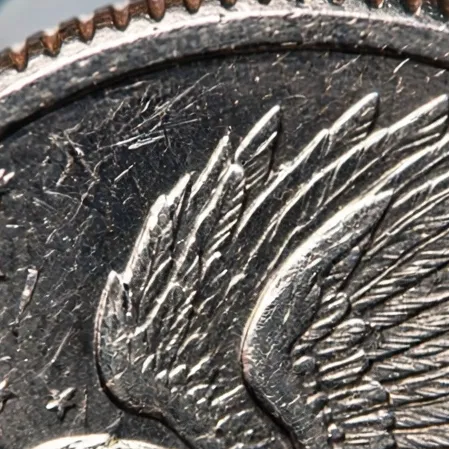
Variety hunting is detail work at the edge of visibility: a doubled die shows in the split of a letter serif; a repunched mint mark hides inside the curve of a D; a die crack announces a late die state worth a premium. The naked eye finds candidates; the microscope confirms or dismisses them.
The working range for variety inspection is honest and modest — roughly 10x–60x on screen, with occasional trips higher for tiny features. What matters more than maximum magnification is clarity at those powers: a sharp lens, stable focus and light you can angle. Doubled dies in particular declare themselves under raking light, where the raised secondary image throws a shadow the flat view misses.
Documentation separates a collection from a pile of maybes. Photograph each variety at a consistent magnification with a scale reference in frame, file it with the coin's weight and diameter, and your attributions become checkable — by you in five years, or by a buyer or attributer tomorrow.
A discipline note that protects your wallet: not every doubling is a doubled die. Machine (strike) doubling is common and carries no premium, and it looks deceptively similar at a glance. Study the differences — genuine die doubling shows rounded, split serifs with separation; machine doubling is flat and shelf-like. A microscope shows you the evidence; references and experience interpret it.
And the standing boundary: inspection supports attribution research. It does not authenticate a coin or assign an official grade — those remain the work of grading and attribution services.
Recommended specifications
Magnification: 10x–60x on screen, sharp at the top of that range
Lighting: dimmable and angleable — raking light reveals doubling
Capture: consistent photo setup with scale reference in frame
Records: weight (0.001 g) and diameter noted with each variety photo
Recommended products
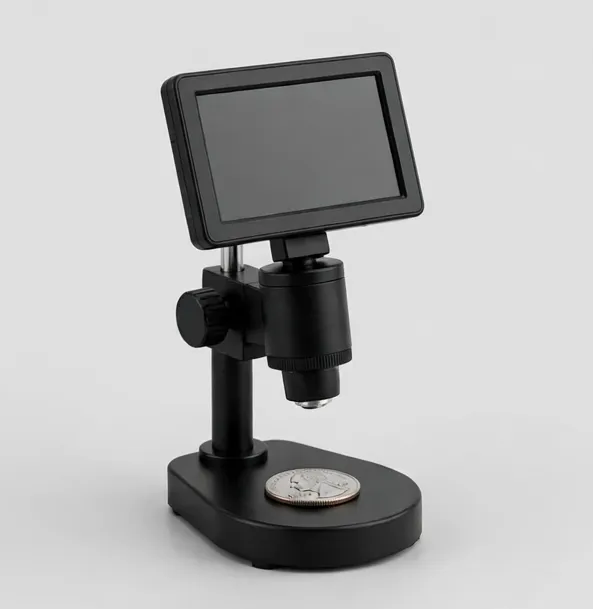
Whole-coin view on screen, with HDMI for closer die and mint-mark study
Built for collectors: a wide field of view that frames a whole large coin on the 7-inch screen, then zooms to mint marks and die details. HDMI output included.
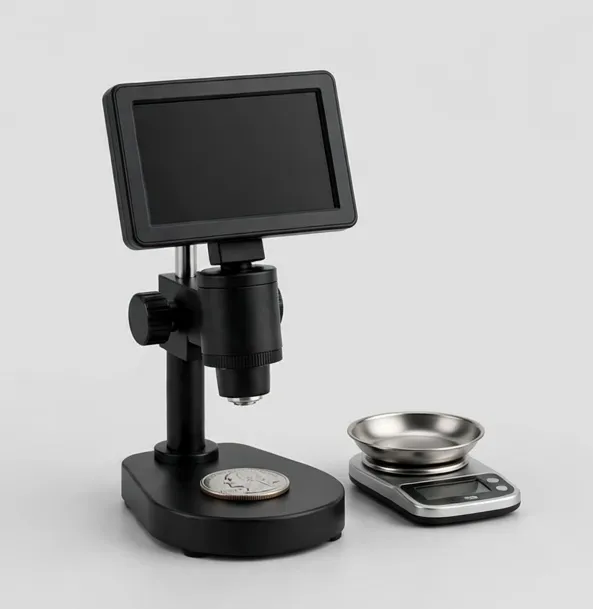
The CoinView 7 package plus a separate 500 g / 0.001 g precision scale for recording coin weights alongside your photos — a useful first check for suspect pieces.
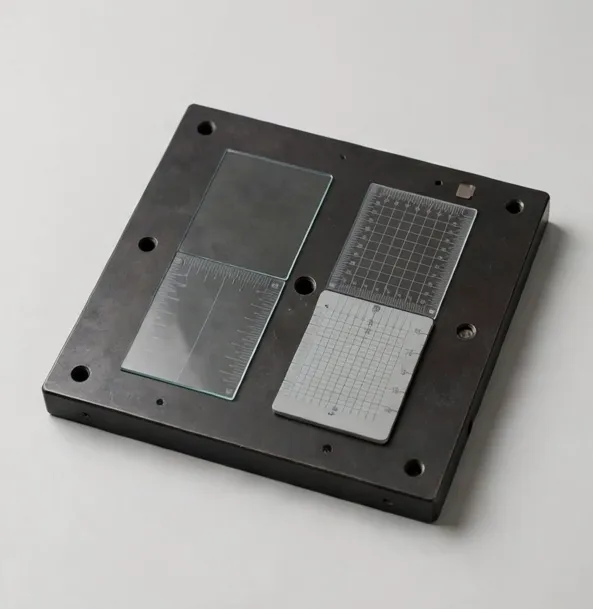
A 0.01 mm stage micrometer and crosshair calibration slide for setting up on-screen measurement. Calibrate once per magnification and measure with confidence.
How can I tell a doubled die from machine doubling?
Under magnification with angled light, doubled-die features are rounded with clear separation and split serifs. Machine doubling appears flat and shelf-like, cut into the device. Compare against published variety photos before concluding.
What magnification shows a repunched mint mark?
Usually 20x–50x on screen is enough, provided the image is sharp and the light rakes across the mint mark area to throw the secondary punch into shadow.
Should I photograph every coin I inspect?
Photograph every candidate variety at a consistent magnification with a scale reference. Consistent files make your attributions verifiable and your listings credible.
Can a microscope confirm an error coin is valuable?
It confirms the features. Value depends on the variety, rarity, condition and the market — and official recognition comes from attribution and grading services, not from any instrument.